THE CHALLENGE
Design an interior door handle that prioritizes safety, accessibility, and intuitive use for all household members—including children, elderly users, and people with limited mobility.
DESIGN APPROACH
I focused on three core principles:
• Safety: Rounded, soft contours to minimize injury risk in case of accidental collision
• Accessibility: A central opening that allows the door to be operated with an elbow, forearm, or even a rope—useful when hands are occupied or for users with limited grip strength
• Universal usability: Simple, intuitive form that works for users of all ages and abilities
THE SOLUTION
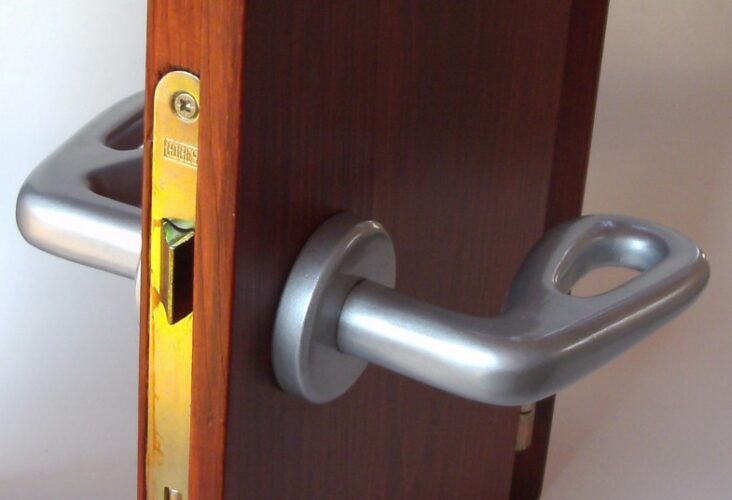
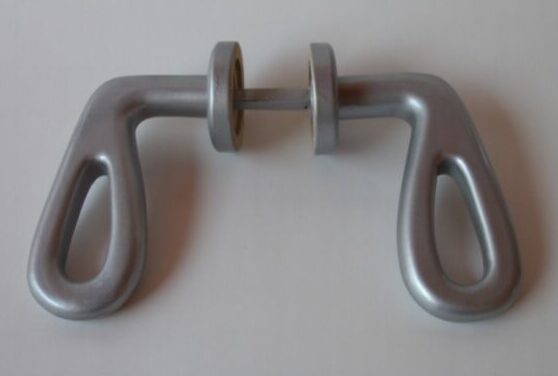
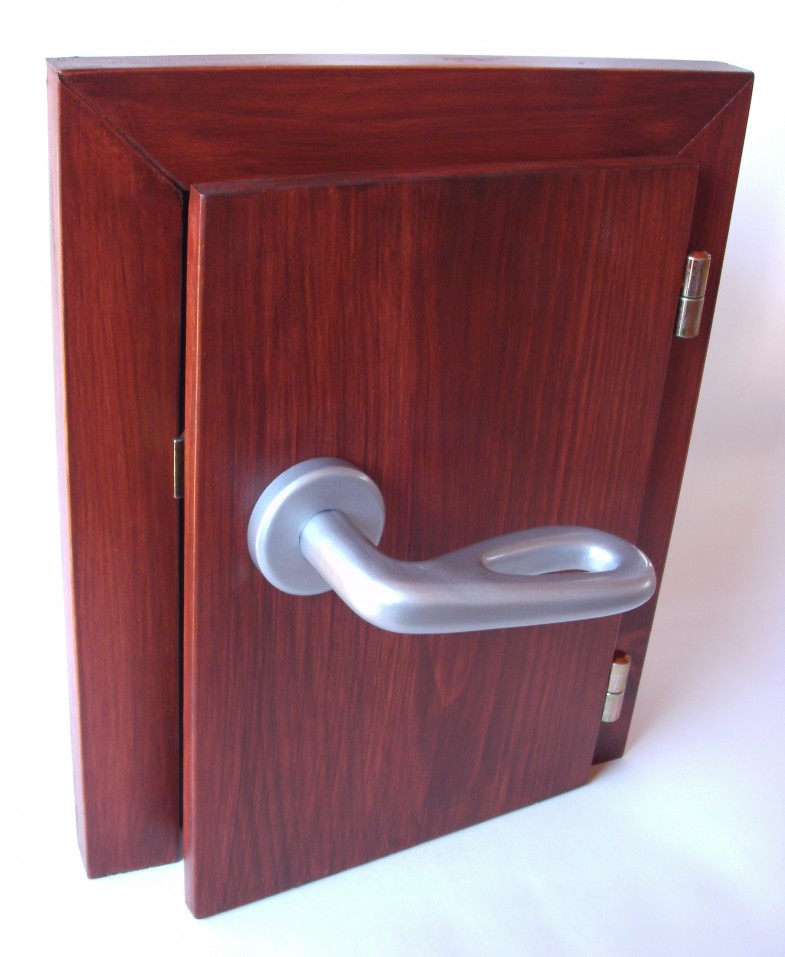
The final concept features a gently curved handle with a hollow center. This opening serves multiple functions:
• Enables elbow operation for hygienic, hands-free access
• Allows a rope or strap to be threaded through, giving children or seated users an easy way to open the door
• Reduces material use while maintaining structural integrity
The ergonomic shape fits naturally in the hand, distributing pressure evenly for comfortable, repeated use.
PROTOTYPE
A 1:1 physical model was crafted from wood and finished with aluminum spray paint to simulate a metallic surface. This allowed testing of form, grip comfort, and visual proportion before potential production.
PROJECT DETAILS
• Role: Industrial Designer (student project)
• Timeline: Semester project, 1st year of studies • Institution: Academy of Fine Arts and Design, Ljubljana (ALUO)
• Mentor: Prof. Fabio Smotlak
• Deliverables: Concept sketches, 3D form development, 1:1 physical prototype, presentation
KEY LEARNING
This early project taught me to think beyond aesthetics—designing for real human needs, safety considerations, and inclusive use. These principles continue to inform my approach to commercial product development today.